When entering second grade, your child should be able to determine if a two-digit number is greater than, less than or equal to another two-digit number and use the >, < and = symbols to show the answer.
View worksheet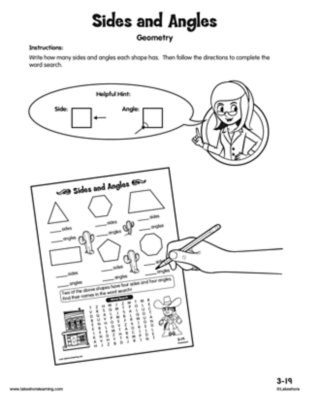
When entering third grade, your child should be able to recognize and draw shapes with specific attributes, such as six angles or three sides. Your child should also be able to identify triangles, quadrilaterals, pentagons, hexagons and cubes.
View worksheet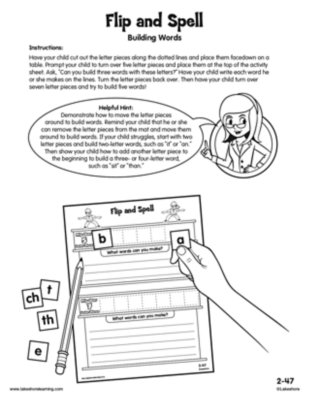
When entering second grade, your child should be able to build and spell simple words by blending sounds together. For example, when given the letters “a,” “e,” “c,” “b,” “d,” “g” and “s,” your child should be able to use the letters to build and read at least three words.
View worksheet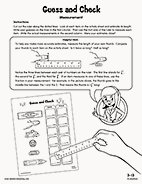
When entering third grade, your child should be able to measure, estimate and compare the lengths of objects in standard units, such as inches, feet, centimeters and meters.
View worksheet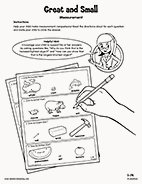
When entering first grade, your child should be able to describe objects by length or weight and compare objects by identifying which is longer, shorter, heavier or lighter.
View worksheet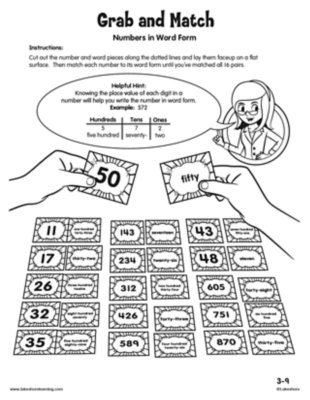
When entering third grade, your child should be able to read and write numbers within 1,000 using numerals and number words.
View worksheet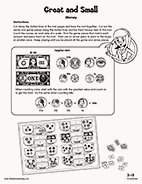
When entering third grade, your child should be able to solve word problems that involve money, including dollar bills, quarters, dimes, nickels and pennies.
View worksheet
During fifth grade, your child will learn to read and analyze level-appropriate stories, dramas, poems and nonfiction texts—summarizing key events and details, analyzing characters and identifying elements such as the main idea and author’s purpose.
View worksheet
During second grade, your child will learn to mentally subtract multiples of 10 from three-digit numbers without having to write down the problems and work them out. For example, 800 — 10 = 790.
View worksheet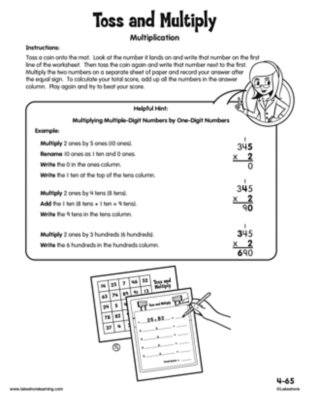
During fourth grade, your child will multiply a number with up to four digits by a one-digit number and multiply two-digit numbers by two-digit numbers. Your child will also divide numbers with up to four digits by a one-digit number, including solving problems with remainders.
View worksheet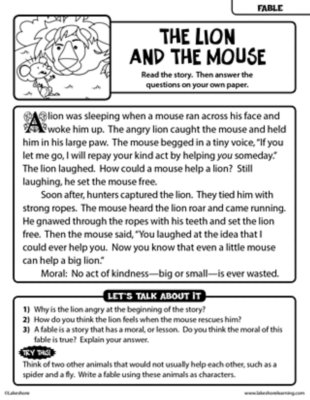
During first grade, your child will learn the attributes of many shapes—such as the fact that a triangle has three sides—and how to divide circles and rectangles into halves and fourths. Your child will also be asked to find shapes within shapes, such as turning a square into two triangles by drawing a line from one corner to the opposite corner.
View worksheet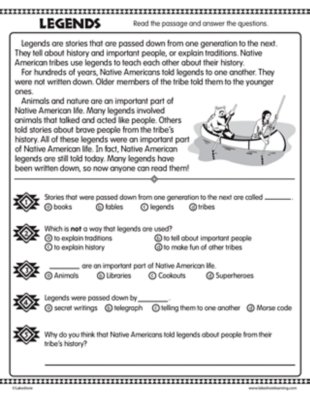
When entering third grade, your child should be able to figure out the meaning of a new word when a prefix or suffix is added to a familiar word, such as figuring out the meaning of “unhappy” based on knowledge of the word “happy.”
View worksheet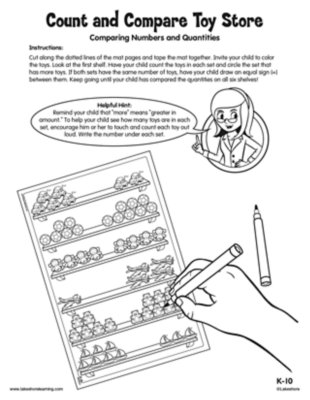
When entering kindergarten, your child should be able to count groups of up to 10 objects and determine if one group of objects is more than, less than or equal to the other.
View worksheet
During kindergarten, your child will learn to write numbers 0 through 20.
View worksheet
During third grade, your child will learn to quickly and easily solve multiplication and division facts within 100 without having to count. For example, 9 x 9 = 81 and 56 ÷ 8 = 7.
View worksheet
During fourth grade, your child will learn to write fractions with denominators of 10 or 100 as decimals, such as writing 3/10 as 0.3 and writing 34/100 as 0.34. Your child will also learn to add and subtract amounts of money using decimals.
View worksheet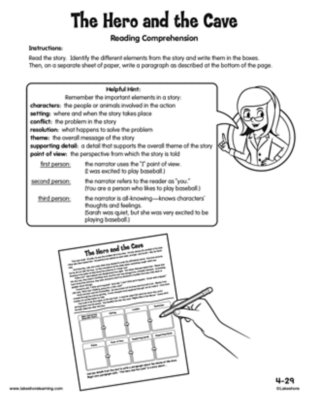
When entering fourth grade, your child should be able to read and analyze level-appropriate stories, dramas, poems and informational texts, identifying elements such as main ideas, key details and the author’s purpose.
View worksheet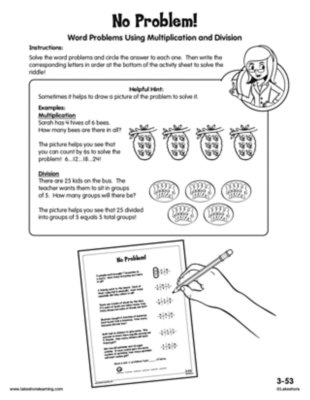
During third grade, your child will learn to solve word problems involving multiplication and division within 100.
View worksheet
When entering third grade, your child should remember to capitalize holidays, product names and geographic names. Your child should also use commas in the greetings and closings of letters and use apostrophes in contractions and possessives, such as “Jeff’s bike.”
View worksheet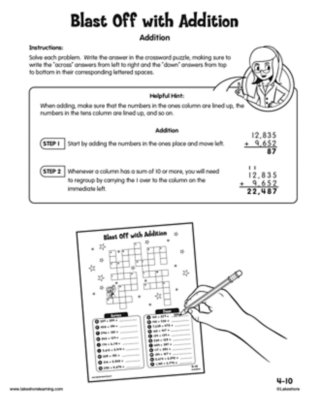
When entering fourth grade, your child should be able to easily add and subtract within 1,000.
View worksheet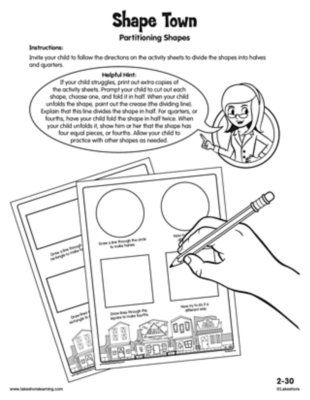
When entering second grade, your child should be able to divide circles and rectangles into halves and fourths and describe the parts of each using words like “halves,” “fourths” and “quarters.”
View worksheet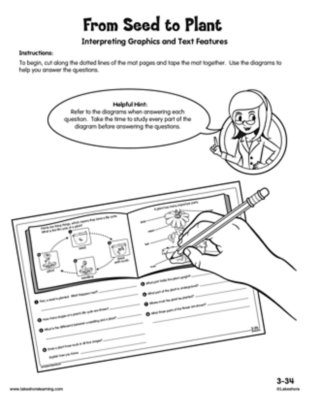
When entering third grade, your child should be able to use text features—including diagrams, bold print, glossaries and indexes—to locate facts in informational texts, such as newspapers, magazines or science books.
View worksheet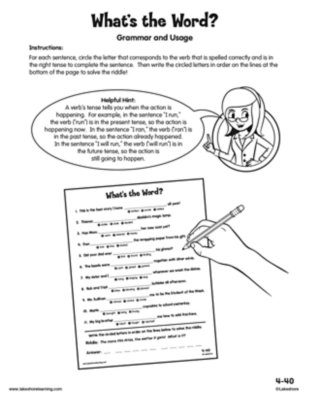
When entering fourth grade, your child should know how to correctly use words in sentences and should know many rules of English grammar, including parts of speech, regular and irregular plural nouns, regular and irregular verbs, verb tenses, subject-verb agreement, sentence structure and more.
View worksheet
When entering third grade, your child should be able to write a paragraph with an opening, three or more details and a closing.
View worksheet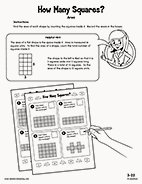
When entering third grade, your child should be able to divide a rectangle into rows and columns of same-size squares and count to find the total number of them.
View worksheet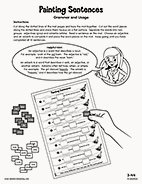
When entering third grade, your child will be expected to know many rules of English grammar and usage, including how to correctly use adjectives, adverbs, pronouns, past-tense verbs and plural words.
View worksheet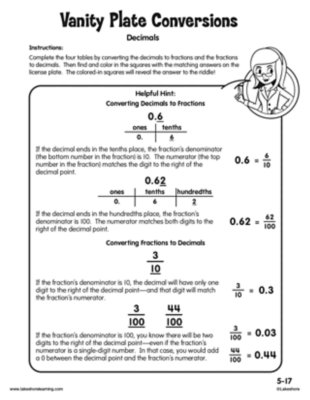
When entering fifth grade, your child should be able to compare decimals to the hundredths place, such as 0.45 and 0.07. Your child should also be able to write fractions with denominators of 10 or 100 as decimals, such as writing 3/10 as 0.3 and writing 34/100 as 0.34.
View worksheet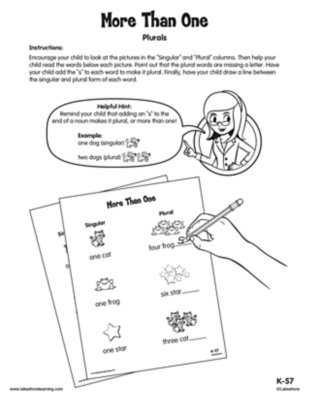
During kindergarten, your child will learn to form regular plural nouns when speaking by adding -s or -es. For example, “dog/dogs” and “wish/wishes.”
View worksheet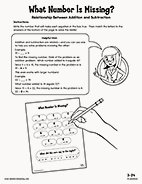
When entering third grade, your child should be able to fluently add and subtract within 100 using their knowledge of the relationship between addition and subtraction. For example, your child can solve the problem 100 — 15 = 85 by understanding that 85 + 15 = 100.
View worksheet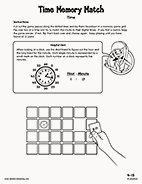
When entering fourth grade, your child should know how to tell and write time to the nearest minute. Your child should also be able to solve problems in which time has elapsed. For example, “The movie started at 5:15 p.m. It was 1 hour and 20 minutes long. What time did the movie end?”
View worksheet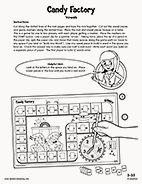
When entering third grade, your child should be able to distinguish long and short vowels when reading regularly spelled one-syllable words, such as “mad” and “made,” and know how to spell words using common vowel teams, such as “ai,” “ea,” “ee,” “oa” and “oi.”
View worksheet
When entering third grade, your child should understand that the three digits in a three-digit number represent hundreds, tens and ones. Your child should also be able to write three-digit numbers in expanded form, such as writing 726 as 700 + 20 + 6. Your child should also be able to compare two 3-digit numbers using the greater than (>), less than (<) and equal to (=) symbols.
View worksheet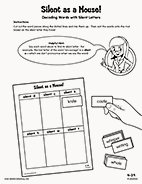
When entering fourth grade, your child should be able to decode and spell multisyllable words and grade-appropriate irregularly spelled words.
View worksheet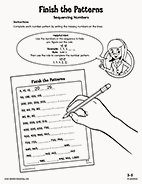
When entering third grade, your child should be able to count and sequence numbers within 1,000 and skip-count by 5s, 10s and 100s.
View worksheet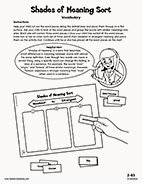
During second grade, your child will build vocabulary and learn to distinguish shades of meaning among closely related words, such as “toss,” “throw” and “hurl” or “thin,” “slender” and “skinny.”
View worksheet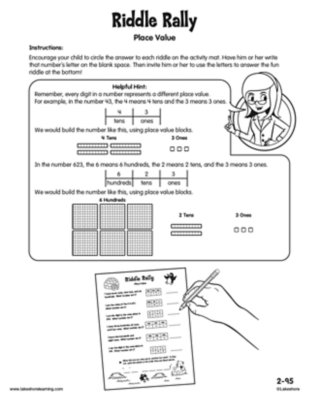
During second grade, your child will learn to identify groups of hundreds, tens and ones when counting. Your child will also learn that the three digits in a three-digit number represent hundreds, tens and ones. For example, there are 7 hundreds, 2 tens and 6 ones in the number 726.
View worksheet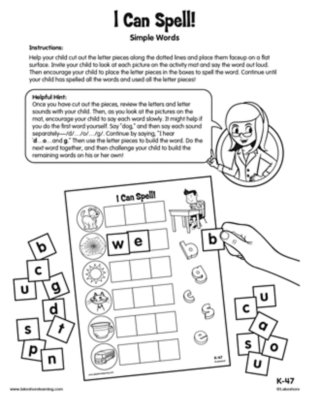
During kindergarten, your child will learn to spell simple words by sounding them out, such as “c-a-t” and “f-o-x.”
View worksheet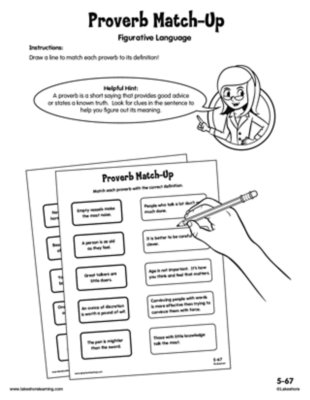
During fifth grade, your child will learn to interpret examples of figurative language, including similes and metaphors, based on the context in which they are used. Your child will also learn to recognize and explain the meaning of common idioms and familiar sayings and expressions, such as, “A bird in the hand is worth two in the bush.”
View worksheet
When entering third grade, your child will be expected to know many rules of English grammar and usage, including how to correctly use adjectives, adverbs, pronouns, past-tense verbs and plural words.
View worksheet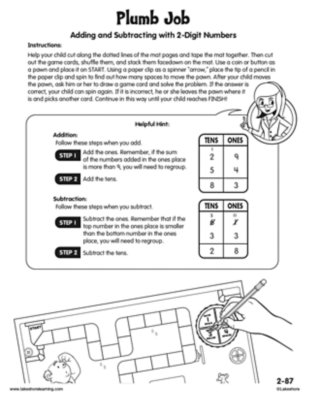
During second grade, your child will learn to add up to four two-digit numbers and fluently add and subtract within 100, using regrouping as needed. For example, 100 — 12 = 88.
View worksheet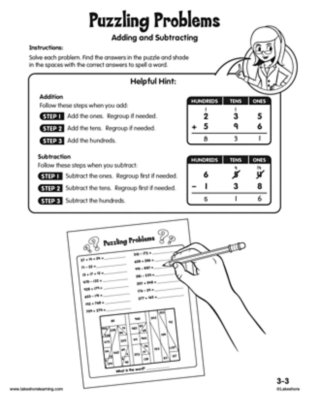
When entering third grade, your child should be able to add and subtract two 3-digit numbers (327 + 216 or 452 — 318), add multiple 2-digit numbers (22 + 14 + 36 + 61) and find the missing number in equations (14 + __ = 19).
View worksheet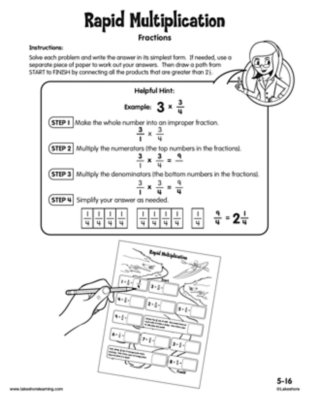
When entering fifth grade, your child should be able to compare fractions, add and subtract fractions with the same denominator and multiply a fraction by a whole number.
View worksheet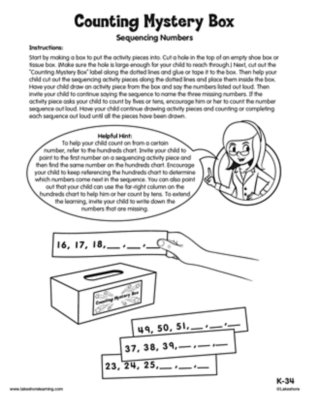
During kindergarten, your child will learn to count in sequence from 1 to 100 by ones (1, 2, 3, 4…) and tens (10, 20, 30, 40…).
View worksheet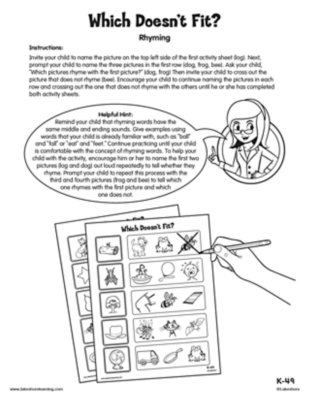
During kindergarten, your child will learn to recognize and create rhyming words.
View worksheet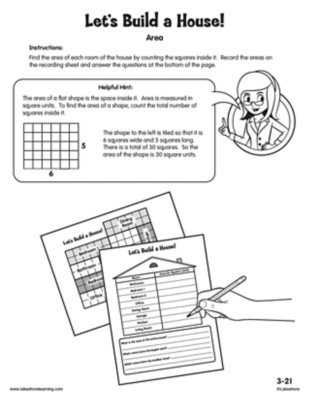
When entering third grade, your child should be able to divide a rectangle into rows and columns of same-size squares and count to find the total number of them.
View worksheet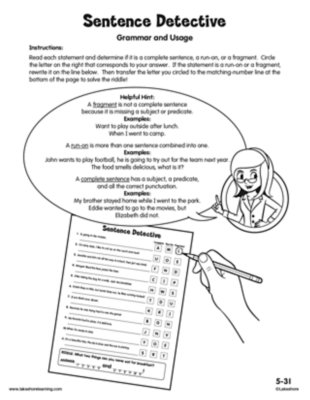
When entering fifth grade, your child should know how to correctly use words in sentences and should know many rules of English grammar and usage, including rules about relative pronouns (which, that), relative adverbs (where, when, why), the correct order of adjectives and more. Your child should also know how to use correct punctuation and capitalization when forming sentences and paragraphs.
View worksheet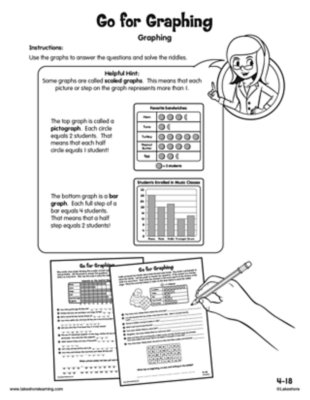
When entering fourth grade, your child should be able to use bar graphs to solve one-step and two-step problems.
View worksheet
During kindergarten, your child will learn to identify the ending sounds in simple words and identify the letter that makes them, such as identifying the “n” sound in “pen.”
View worksheet
When entering first grade, your child should be able to describe familiar people, places, things and events and express their thoughts, feelings and ideas clearly.
View worksheet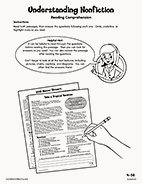
During fourth grade, your child will read and analyze level-appropriate stories, dramas, poems and informational texts, exploring elements such as main ideas, key details, point of view, making inferences and the author’s purpose.
View worksheet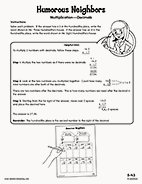
During fifth grade, your child will learn to multiply and divide decimals to the hundredths place. For example, 212 x 0.45 = 95.40.
View worksheet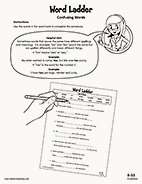
When entering fifth grade, your child should be able to correctly use frequently confused words, such as “to” and “two” or “there” and “their.”
View worksheet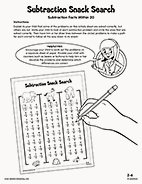
When entering second grade, your child should be able to subtract within 20 fluently. For example, 18 — 5 = 13 and 20 — 6 = 14.
View worksheet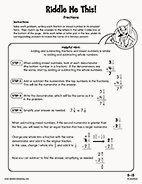
When entering fifth grade, your child should be able to compare fractions, add and subtract fractions with the same denominator and multiply a fraction by a whole number.
View worksheet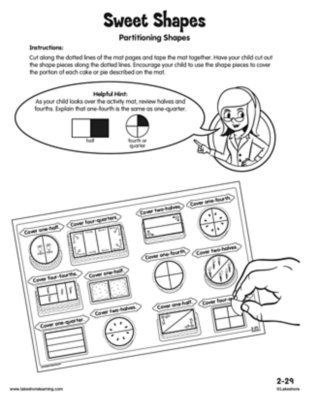
When entering second grade, your child should be able to divide circles and rectangles into halves and fourths and describe the parts of each using words like “halves,” “fourths” and “quarters.”
View worksheet
When entering third grade, your child should be able to use common spelling patterns to decode and spell words easily, such as “cart,” “chart” and “smart.”
View worksheet
During third grade, your child will learn many new rules of English grammar and usage, including rules about parts of speech, regular and irregular plural nouns, regular and irregular verbs, verb tenses, subject-verb agreement, sentence structure and more.
View worksheet
When entering fourth grade, your child should be able to recognize common features of nonfiction text, such as diagrams, graphs and photo captions. Your child should also be able to use those features to locate information.
View worksheet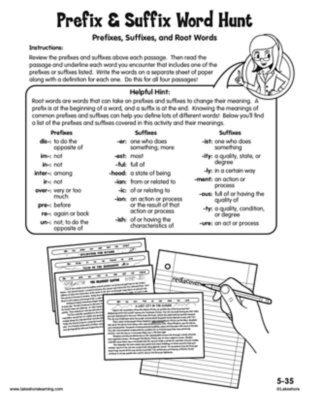
When entering fifth grade, your child should be able to use common, grade-appropriate Greek and Latin prefixes, suffixes and roots to figure out the meaning of a word. For example, “telegraph,” “photograph” and “autograph” all contain the Greek root “graph,” which refers to something that is written or drawn.
View worksheet
When entering fourth grade, your child should know how to tell and write time to the nearest minute. Your child should also be able to solve problems in which time has elapsed. For example, “The movie started at 5:15 p.m. It was 1 hour and 20 minutes long. What time did the movie end?”
View worksheet
When entering third grade, your child should be able to write a paragraph with an opening, three or more details and a closing.
View worksheet
When entering fifth grade, your child should be able to compare and round multidigit numbers. Your child should also be able to read and write multidigit numbers in number, word and expanded form. For example, 765; seven hundred sixty-five; 700 + 60 + 5.
View worksheet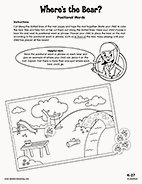
When entering kindergarten, your child should be able to describe the positions of objects and shapes using positional words and phrases, such as “in front of,” “behind,” “over,” “under” and “next to.”
View worksheet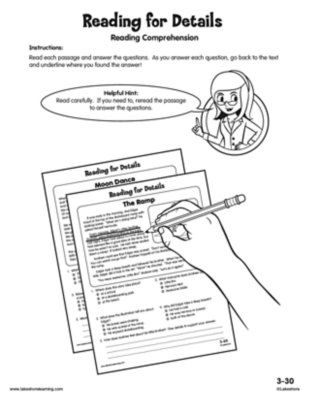
When entering third grade, your child should be able to analyze fiction and nonfiction texts—identifying elements such as main ideas, key details and the author’s purpose.
View worksheet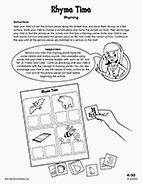
During kindergarten, your child will learn to recognize and create rhyming words.
View worksheet
During first grade, your child will learn to figure out the meanings of new words and multiple-meaning words based on the context in which they are used.
View worksheet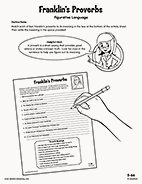
During fifth grade, your child will learn to interpret examples of figurative language, including similes and metaphors, based on the context in which they are used. Your child will also learn to recognize and explain the meaning of common idioms and familiar sayings and expressions, such as, “A bird in the hand is worth two in the bush.”
View worksheet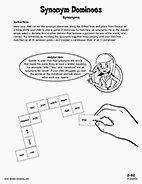
When entering second grade, your child should be able to identify words with similar meanings and distinguish subtle differences between them. For example, “large” and “gigantic” are synonyms, but “gigantic” has a stronger meaning than “large.”
View worksheet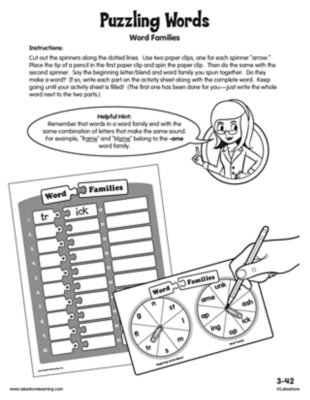
When entering third grade, your child should be able to use common spelling patterns to decode and spell words easily, such as “cart,” “chart” and “smart.”
View worksheet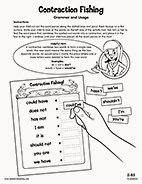
During second grade, your child will learn many rules of English grammar and usage, including how to use adjectives and adverbs correctly, how to form and use contractions, and how to rearrange sentences to read correctly.
View worksheet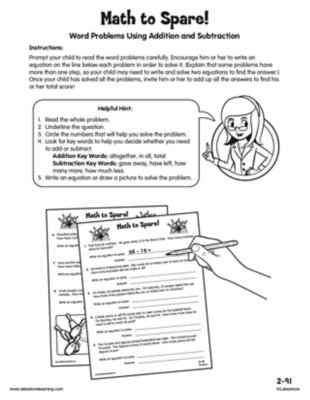
During second grade, your child will learn to solve one- and two-step word problems involving addition and subtraction within 100.
View worksheet
When entering first grade, your child should understand that sentences begin with a capital letter and that the word “I” is also capitalized. Your child should also be able to recognize and name the punctuation marks at the end of sentences, including periods, question marks and exclamation points.
View worksheet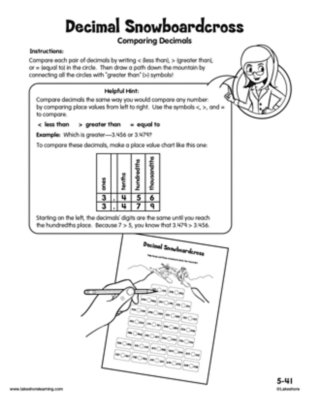
During fifth grade, your child will learn to compare decimals to the thousandths place using the greater than (>), less than (<) and equal to (=) symbols, such as 0.392 > 0.329.
View worksheet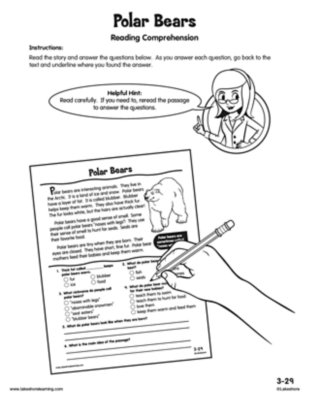
When entering third grade, your child should be able to analyze fiction and nonfiction texts—identifying elements such as main ideas, key details and the author’s purpose.
View worksheet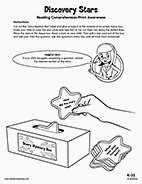
When entering kindergarten, your child should be able to listen to a story and ask and answer questions about key details, such as identifying characters and events and retelling the story in their own words. Your child should also understand the basic features of print, such as differentiating letters from words, recognizing that words have spaces between them and distinguishing the roles of authors and illustrators.
View worksheet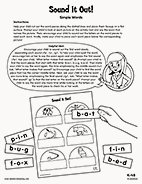
During kindergarten, your child will learn to spell simple words by sounding them out, such as “c-a-t” and “f-o-x.”
View worksheet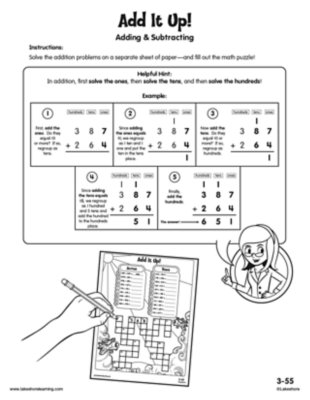
During third grade, your child will learn to easily add and subtract two 3-digit numbers, using regrouping when needed.
View worksheet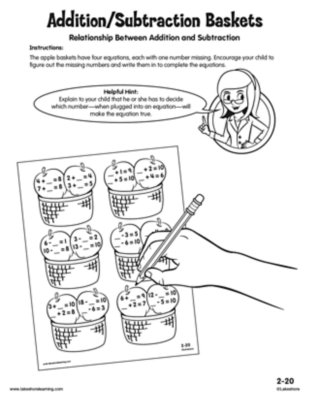
When entering second grade, your child should understand that addition and subtraction are related. Your child should also be able to determine the missing number in an addition or subtraction equation. For example, 6 + __ = 8.
View worksheet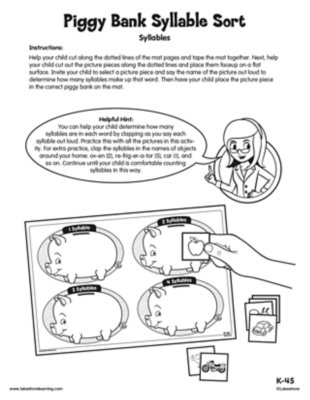
During kindergarten, your child will learn to count and say the syllables in spoken words. For example, your child should understand that “kitten” has two syllables: kit•ten.
View worksheet
When entering fourth grade, your child should know how to solve two-step word problems involving addition, subtraction, multiplication and division.
View worksheet
When entering second grade, your child should be able to mentally add 10 to or subtract 10 from any two-digit number—without having to count. For example, 32 + 10 = 42 and 35 — 10 = 25.
View worksheet
When entering fifth grade, your child should know how to correctly use words in sentences and should know many rules of English grammar and usage, including rules about relative pronouns (which, that), relative adverbs (where, when, why), the correct order of adjectives and more. Your child should also know how to use correct punctuation and capitalization when forming sentences and paragraphs.
View worksheet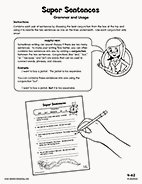
During fourth grade, your child will learn many new rules of English grammar and usage, including rules about sentence fragments and run-on sentences, relative pronouns (which, that), relative adverbs (where, when, why), the correct order of adjectives and more.
View worksheet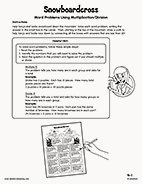
When entering fourth grade, your child should know how to solve word problems involving multiplication and division within 100.
View worksheet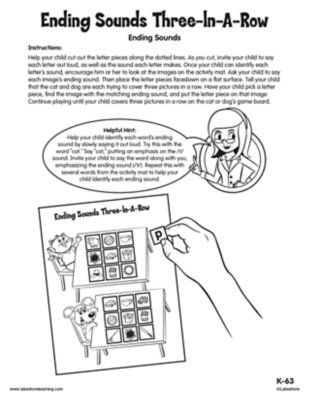
During kindergarten, your child will learn to identify the ending sounds in simple words and identify the letter that makes them, such as identifying the “n” sound in “pen.”
View worksheet
When entering first grade, your child should be able to describe familiar people, places, things and events and express their thoughts, feelings and ideas clearly.
View worksheet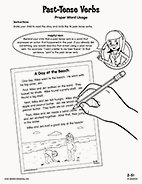
When entering second grade, your child should be able to correctly use pronouns, singular and plural words, and past-, present- and future-tense words in sentences.
View worksheet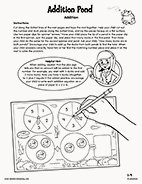
When entering first grade, your child should be able to add and subtract simple facts. For example, 3 + 7 = 10 and 10 — 5 = 5.
View worksheet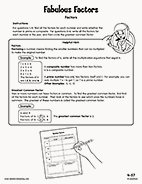
During fourth grade, your child will learn about factors, which are numbers that can be multiplied together to reach another number. For example, the factors of 6 are 1 and 6 (1 x 6 = 6), as well as 2 and 3 (2 x 3 = 6). Your child will also learn about multiples, which are numbers that are reached by multiplying one number by another. 12 is a multiple of 3 because you can multiply 3 x 4 to reach 12.
View worksheet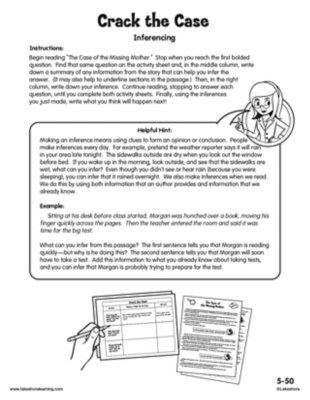
During fifth grade, your child will learn to make inferences when reading fiction and nonfiction text passages, citing places in the text that led your child to draw certain conclusions.
View worksheet
During fifth grade, your child will learn to read and analyze level-appropriate stories, dramas, poems and nonfiction texts—summarizing key events and details, analyzing characters and identifying elements such as the main idea and author’s purpose.
View worksheet