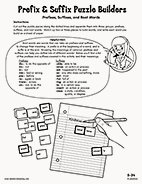
Prefix & Suffix Puzzle Builders
5th Grade
When entering fifth grade, your child should be able to use common, grade-appropriate Greek and Latin prefixes, suffixes and roots to figure out the meaning of a word. For example, “telegraph,” “photograph” and “autograph” all contain the Greek root “graph,” which refers to something that is written or drawn.
View worksheet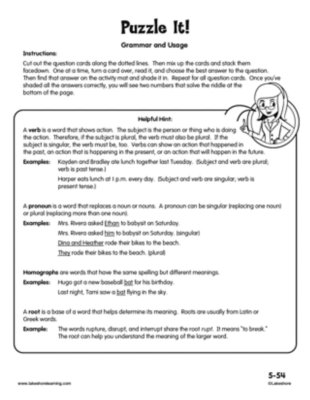
Puzzle It!
5th Grade
During fifth grade, your child will learn many new rules of English grammar and usage, including how to correctly use verb tenses, conjunctions and prepositions in sentences. Your child will also learn new rules about the correct use of punctuation and capitalization when forming sentences and paragraphs.
View worksheet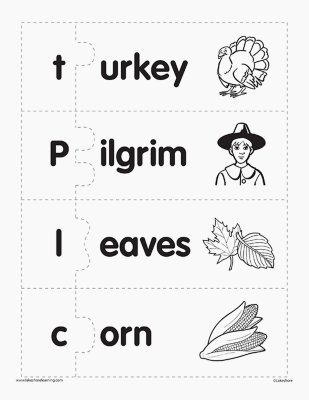
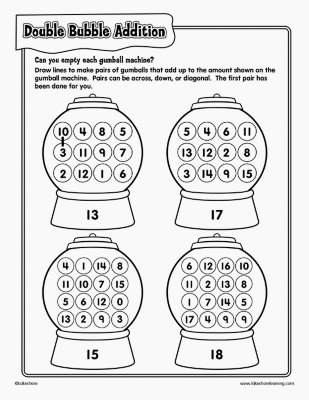
Puzzle Problems
2nd Grade
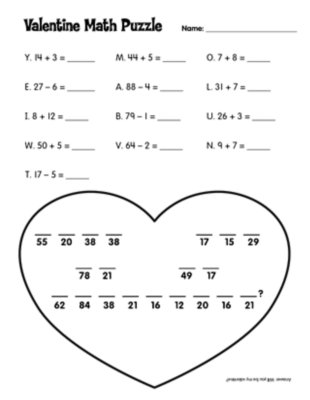
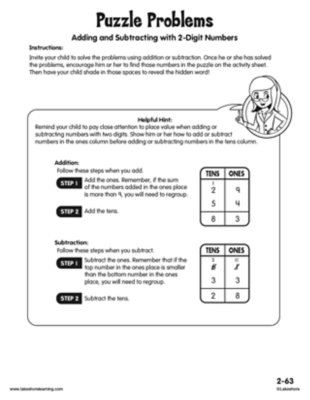
During second grade, your child will learn to add up to four two-digit numbers and fluently add and subtract within 100, using regrouping as needed. For example, 100 — 12 = 88.
View worksheet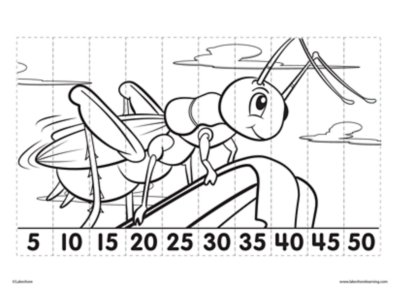
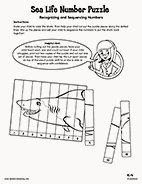
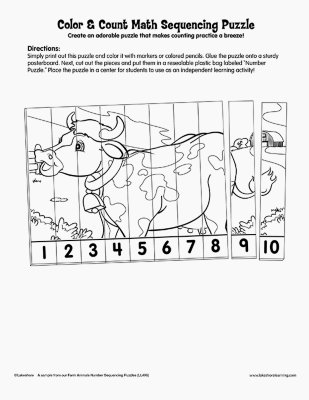
Sea Life Number Puzzle
Kindergarten
When entering kindergarten, your child should be able to recognize numbers 1 to 20 and count them in sequence.
View worksheet
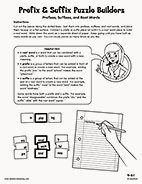
Prefix & Suffix Puzzle Builders
4th Grade
During fourth grade, your child will learn to use common, grade-appropriate Greek and Latin prefixes, suffixes and roots to figure out the meaning of a word. For example, “telegraph,” “photograph” and “autograph” all contain the Greek root “graph,” which refers to something that is written or drawn.
View worksheet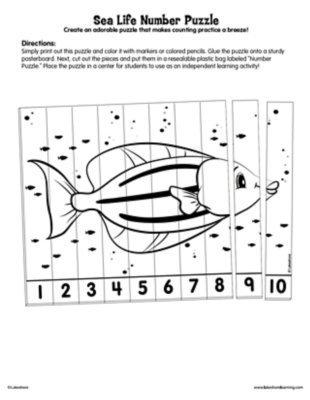
Simple Word Puzzles
1st Grade
When entering first grade, your child should be able to spell simple words by sounding them out, such as “c-a-t” and “f-o-x.”
View worksheet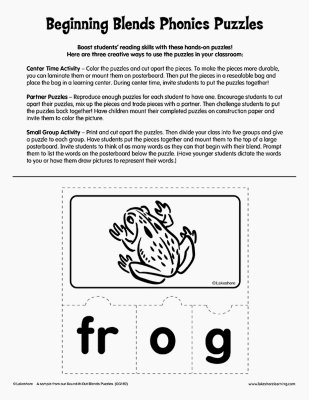
Telling Time Puzzles
3rd Grade
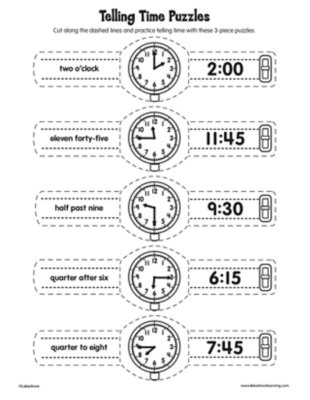
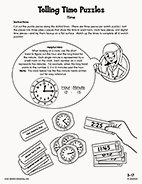
When entering third grade, your child should be able to tell and write time from clock faces and digital clocks to the nearest five minutes. For example, 8:05 a.m. or 2:15 p.m.
View worksheet
Telling Time Puzzles
2nd Grade
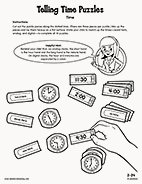
When entering second grade, your child should be able to tell and write time in hours and half-hours using clock faces and digital clocks.
View worksheet