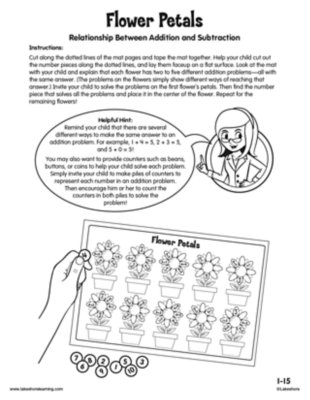
When entering first grade, your child should be able to use objects or drawings to answer “How many more make 10?” when given a number. Your child should also be able to use objects or drawings to break apart any number up to 10 in more than one way, such as breaking up the number 7 into 5 and 2, as well as 3 and 4.
View worksheet
When entering kindergarten, your child should be able to compare objects and describe their similarities and differences, including distinguishing by color, size, weight or shape. Your child should also be able to describe objects using the correct words, such as “big,” “small,” “short” and “tall.”
View worksheet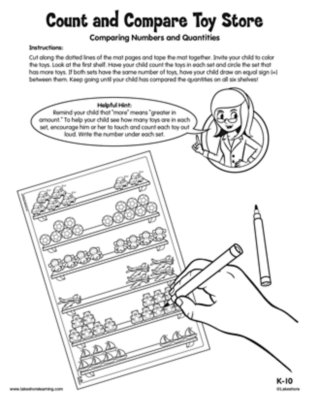
When entering kindergarten, your child should be able to count groups of up to 10 objects and determine if one group of objects is more than, less than or equal to the other.
View worksheet
When entering first grade, your child should be able to describe objects by length or weight and compare objects by identifying which is longer, shorter, heavier or lighter.
View worksheet
When entering first grade, your child should be able to use objects or drawings to answer “How many more make 10?” when given a number. Your child should also be able to use objects or drawings to break apart any number up to 10 in more than one way, such as breaking up the number 7 into 5 and 2, as well as 3 and 4.
View worksheet
When entering first grade, your child should be able to describe objects by length or weight and compare objects by identifying which is longer, shorter, heavier or lighter.
View worksheet
When entering kindergarten, your child should be able to group common objects into categories and identify reasons for grouping the objects. For example, if given a lamp, sofa and zebra, your child should be able to group the lamp and sofa together because they are household items, while the zebra is not.
View worksheet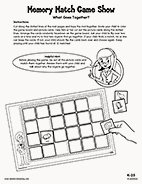
When entering kindergarten, your child should be able to group common objects into categories and identify reasons for grouping the objects. For example, if given a lamp, sofa and zebra, your child should be able to group the lamp and sofa together because they are household items, while the zebra is not.
View worksheet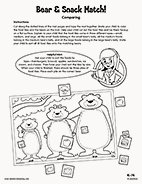
When entering kindergarten, your child should be able to compare objects and describe their similarities and differences, including distinguishing by color, size, weight or shape. Your child should also be able to describe objects using the correct words, such as “big,” “small,” “short” and “tall.”
View worksheet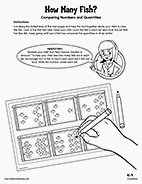
When entering kindergarten, your child should be able to count groups of up to 10 objects and determine if one group of objects is more than, less than or equal to the other.
View worksheet
When entering fourth grade, your child should be able to measure the lengths of objects using rulers marked with halves and fourths of an inch.
View worksheet
When entering kindergarten, your child should be able to identify simple shapes—such as squares, circles, triangles and rectangles—and describe objects in the real world using shape names.
View worksheet
When entering kindergarten, your child should be able to count to tell the number of objects.
View worksheet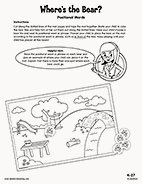
When entering kindergarten, your child should be able to describe the positions of objects and shapes using positional words and phrases, such as “in front of,” “behind,” “over,” “under” and “next to.”
View worksheet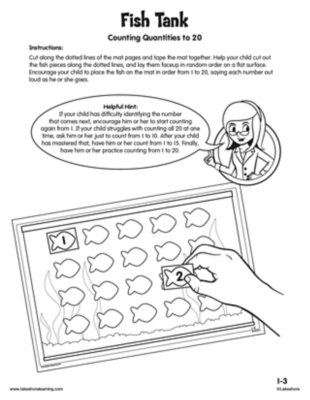
When entering first grade, your child should be able to count as many as 20 objects at a time.
View worksheet
During kindergarten, your child will learn to count as many as 20 objects at a time.
View worksheet
When entering third grade, your child should be able to measure, estimate and compare the lengths of objects in standard units, such as inches, feet, centimeters and meters.
View worksheet
When entering kindergarten, your child should be able to identify how long something is by measuring it with like objects instead of a ruler. This is called nonstandard units of measurement. For example, “The dolphin is nine fish long.”
View worksheet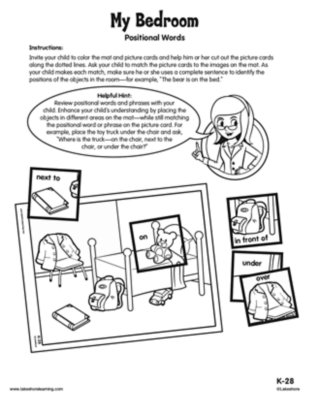
When entering kindergarten, your child should be able to describe the positions of objects and shapes using positional words and phrases, such as “in front of,” “behind,” “over,” “under” and “next to.”
View worksheet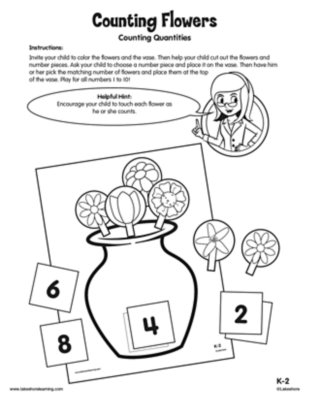
When entering kindergarten, your child should be able to count to tell the number of objects.
View worksheet
When entering first grade, your child should be able to count as many as 20 objects at a time.
View worksheet
During kindergarten, your child will learn to count as many as 20 objects at a time.
View worksheet
When entering third grade, your child should be able to measure, estimate and compare the lengths of objects in standard units, such as inches, feet, centimeters and meters.
View worksheet
When entering first grade, your child should be able to determine if a number or group of objects is greater than, less than or equal to another.
View worksheet
When entering kindergarten, your child should be able to identify how long something is by measuring it with like objects instead of a ruler. This is called nonstandard units of measurement. For example, “The dolphin is nine fish long.”
View worksheet
When entering first grade, your child should be able to determine if a number or group of objects is greater than, less than or equal to another.
View worksheet
When entering kindergarten, your child should be able to perform simple addition and subtraction using objects or their fingers. For example, “If we have 3 apples and add 2 more, how many apples do we have altogether?”
View worksheet
When entering kindergarten, your child should be able to identify simple shapes—such as squares, circles, triangles and rectangles—and describe objects in the real world using shape names.
View worksheet
When entering kindergarten, your child should be able to perform simple addition and subtraction using objects or their fingers. For example, “If we have 3 apples and add 2 more, how many apples do we have altogether?”
View worksheet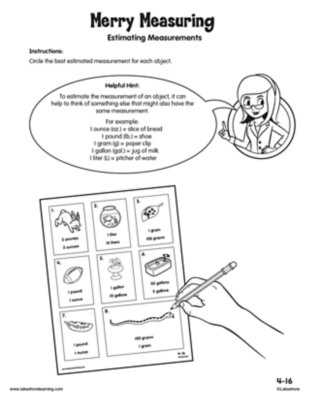
When entering fourth grade, your child should be able to estimate liquid volumes and masses of objects using grams, kilograms and liters.
View worksheet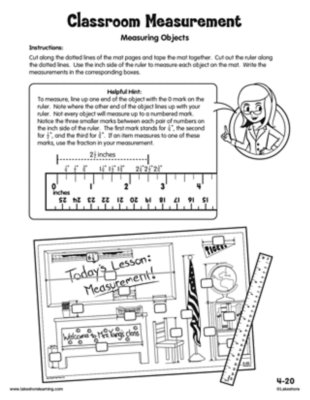
When entering fourth grade, your child should be able to measure the lengths of objects using rulers marked with halves and fourths of an inch.
View worksheet
When entering fourth grade, your child should be able to estimate liquid volumes and masses of objects using grams, kilograms and liters.
View worksheet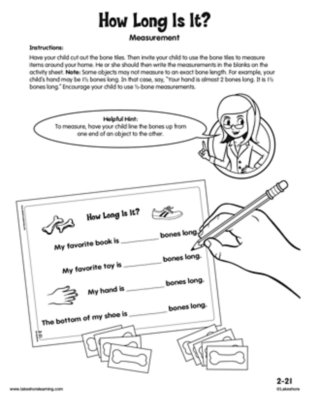
When entering second grade, your child should be able to measure an object’s length by lining up multiple units of a shorter object end to end and naming how many units long the object is. For example, using paper clips to measure the length of a table.
View worksheet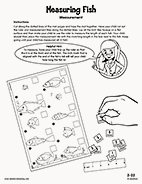
When entering second grade, your child should be able to measure an object’s length by lining up multiple units of a shorter object end to end and naming how many units long the object is. For example, using paper clips to measure the length of a table.
View worksheet