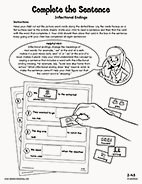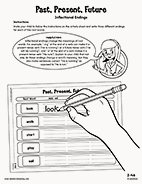
When entering second grade, your child should be able to read words with inflectional endings and use them correctly in sentences. Inflectional endings are letters that are added to words, such as “-ing,” “-es,” or “-ed.” For example, your child should be able to read the words “wishing,” “wishes” and “wished” and use them correctly in sentences.
View worksheetWhen entering second grade, your child should be able to read words with inflectional endings and use them correctly in sentences. Inflectional endings are letters that are added to words, such as “-ing,” “-es,” or “-ed.” For example, your child should be able to read the words “wishing,” “wishes” and “wished” and use them correctly in sentences.
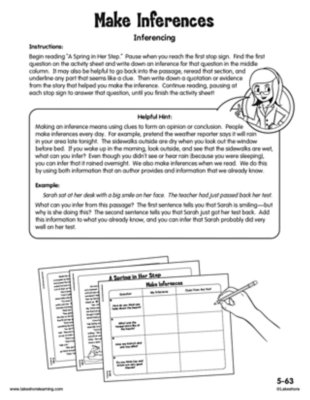
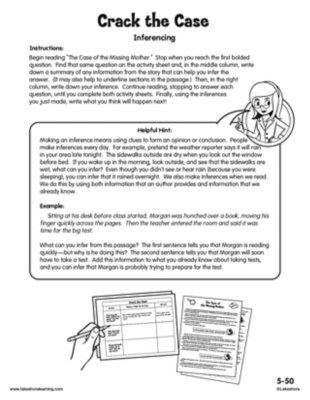
View worksheetDuring fifth grade, your child will learn to make inferences when reading fiction and nonfiction text passages, citing places in the text that led your child to draw certain conclusions.
View worksheetDuring fifth grade, your child will learn to make inferences when reading fiction and nonfiction text passages, citing places in the text that led your child to draw certain conclusions.
View worksheet